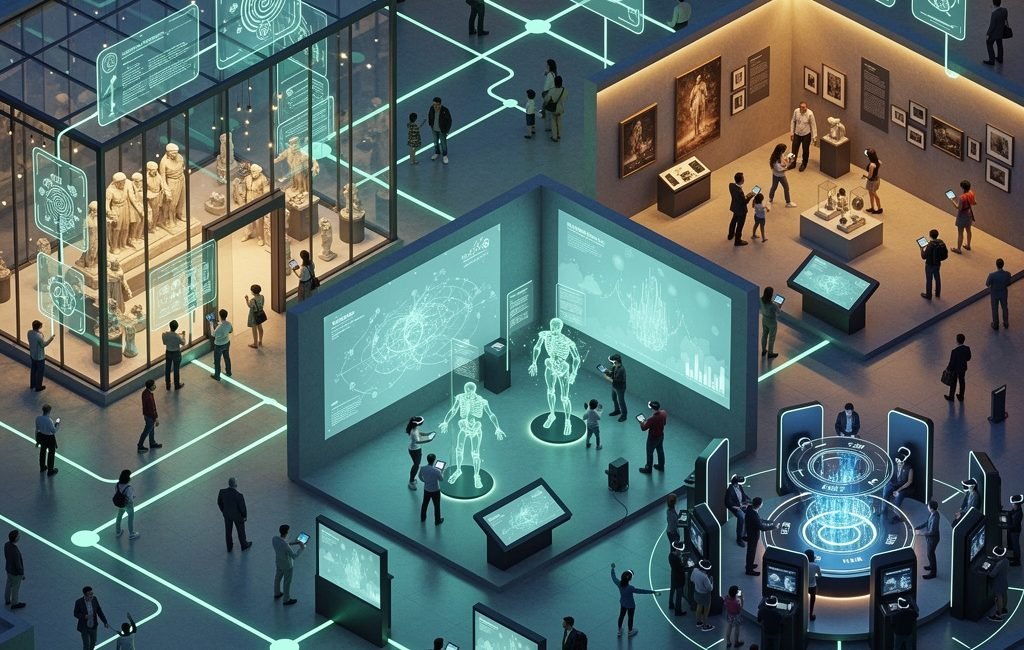
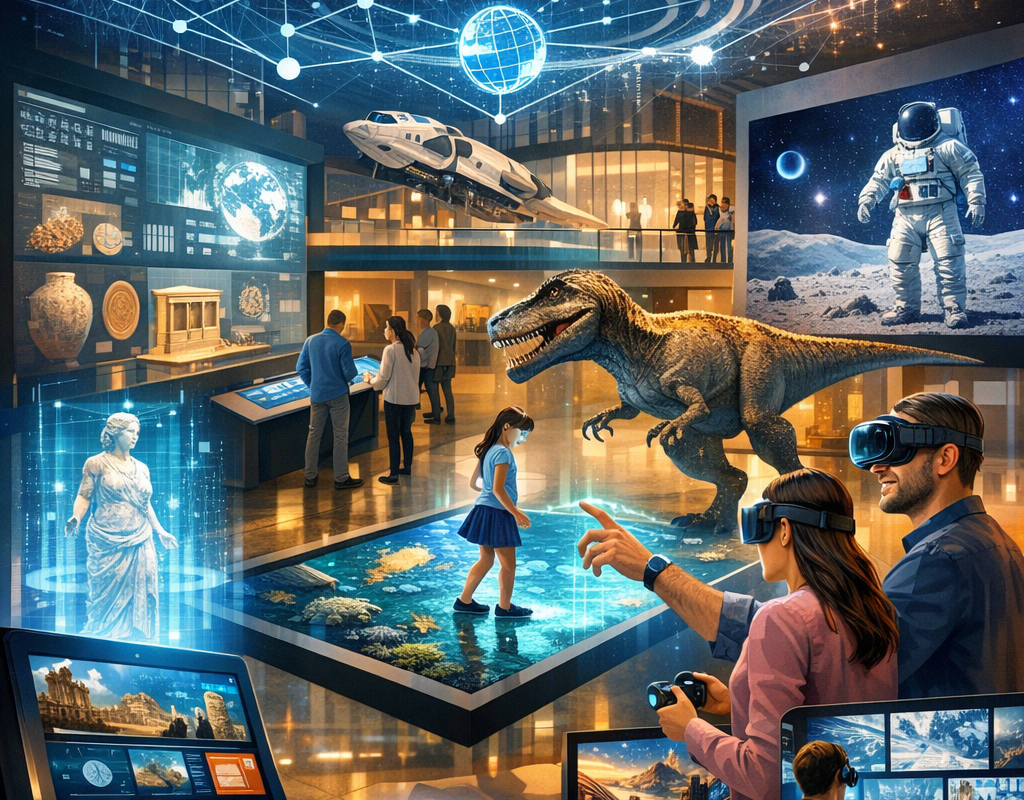
Digital integration transcends much further than screen-to-screen, lens-systems integration: it defines the experience of people in a given space. Technology can also be a silent helper by creating a tangible direction that helps to tell a story, evoke emotion, and user perceptions without their notice.
Key ways digital integration enables experiences:
Seamless Visitor Journeys: Integrated system ensures that there are no discontinuities between the zones, attractions, and touchpoints. Tourists are taken through the natural flow of time and not disjointed segmentation.
Responsive Environments: Space reacts dynamically to movement, sound, lighting conditions, or user input, and forms dynamic personal experiences.
Story-Driven Technology: Digital elements assist the story’s purpose and do not overwhelm it. The lighting effects, soundscapes, and visual media collaborate in supporting themes and feelings.
Immersive Multi-Sensory Layers: Audio, visuals, motion, and interactivity are synchronized to create depth and realism, allowing guests to feel fully immersed in the environment.
Intuitive User Interaction: Integrated systems incur fewer learning curves, which means that visitors can interact without the need of lectures and instructions.
Operational Intelligence: Behind the scenes, data makes informed decisions to assist operators in tracking the performance, controlling crowds, and improving experiences on the fly.
When digital integration is looked upon as an experience-oriented tool instead of a technical addition, the environments become more interactive and memorable and, most importantly, more emotional.