
Snomusement Innovations LLP

Visitor Flow

Designing movement that feels intuitive, comfortable, and quietly intelligent

Visitor Flow Design Services

Visitors to entertainment sites might go there to be entertained, but they will find it effortless to move around, see and visit the sites, and be able to come back. The Visitor flow is the invisible pattern that determines the way people will perceive a space. When circulation is intelligently designed, guests will feel led and not bossed around, vibrant and not exhausted.

The lack of a good flow of visitors is manifested almost immediately: the walkways are overcrowded, the crossings are unclear, long queues overflow into the active areas, and the exhausted visitors end up a few hours earlier than originally intended. A large number of visitors has the reverse effect. It establishes a rhythm, shares the energy, and lets the occurrences take their natural course.
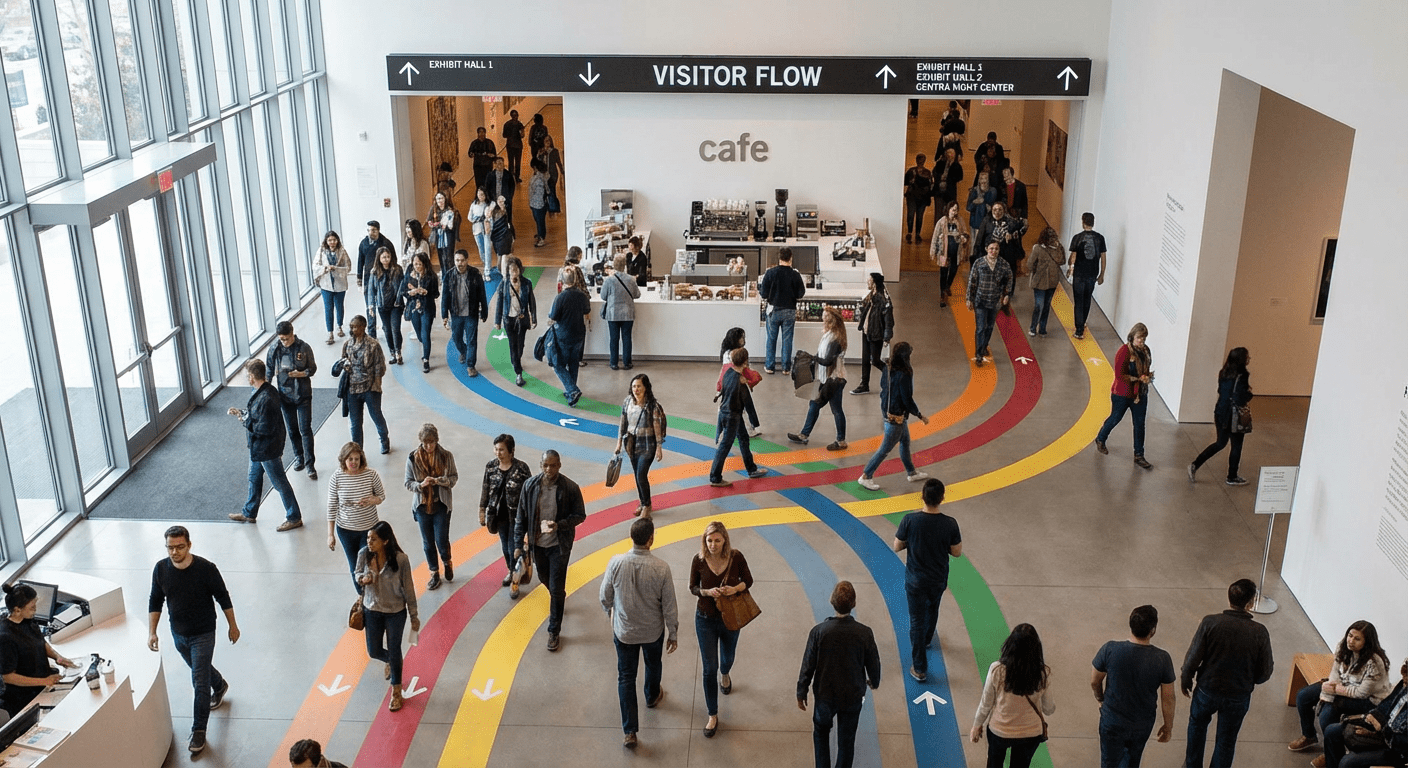
What Is Visitor Flow Design?

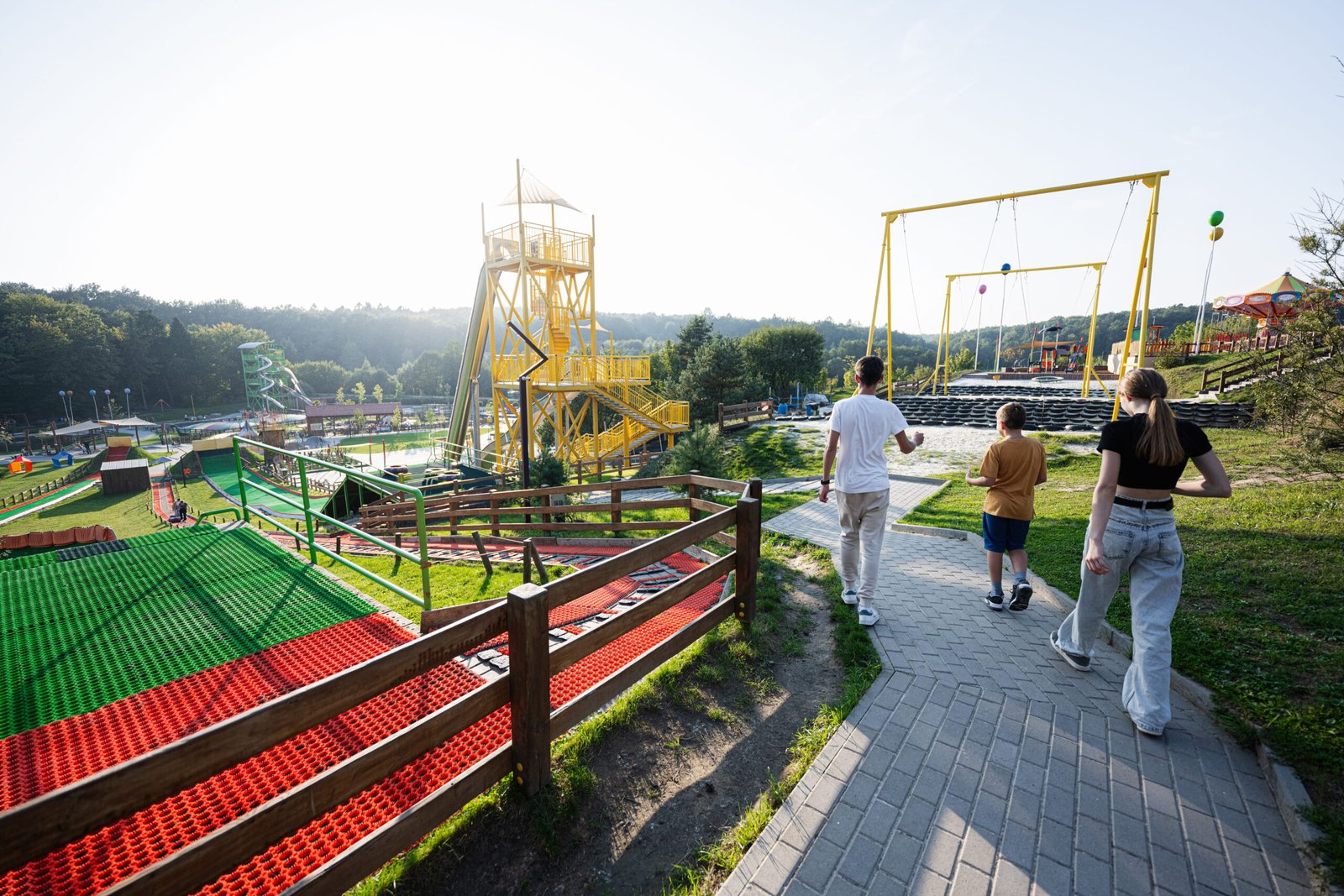
Visitor flow design refers to the order of the movement of visitors in a destination and is usually planned in terms of time, density, and experience areas. It takes into account arrival patterns, attraction sequencing, dwell behavior, queue dynamics, and exit dispersal.

We are experts in Visitor Flow Design Services, which is why we consider circulation as a spatial and psychological activity. Individuals do not walk in any direction, but they are guided by visual images, human conduct, comfort levels, and emotion. The flow has to be designed to foresee the existence of those instincts and work space around them.

The result is a lack of unnecessary signage, effectiveness without austerity, and comfort even when at top capacity.

Why Visitor Flow Is More Than Crowd Control

Visitor flow is often mistaken for crowd management alone. In reality, it plays a central role in storytelling, pacing, and emotional engagement.

Thoughtful flow design:

  • Builds anticipation as guests move deeper into a destination
  • Prevents fatigue by balancing movement and pause
  • Encourages exploration without disorientation
  • Protects high-value attractions from congestion overload

When circulation works, guests remember the experience, not the logistics that supported it.

Our Approach to Visitor Flow Planning

No two destinations behave the same once operational. Our approach is rooted in observation, simulation, and scenario testing rather than assumptions.

Crowd Flow Planning for Theme Parks

Theme parks work with dynamic pressure. The popularity of a ride changes, release crowds come in waves, and one weather or downtime can cause an immediate diversion.


Our Crowd Flow Planning of Theme Parks is aimed at the distribution of guests instead of centralizing them. The placement of attractions, visual anchors, path widths, and loop system is coordinated in such a way that there are no dead ends and pressure points.


This is a balanced distribution that ensures the comfort of the guests and the stability of the ride capacity, food service performance, and retail exposure.

Visitor Circulation Design Across the Entire Site

Pathways are not the only areas of visitor circulation. Movement is influenced by the entry plazas, ticketing areas, bathrooms, food court, retail, and exit zones, all of which affect the feel of movement.


We are a Visitor Circulation Design Company, and we design these functional spaces as a part of the journey. The facilities are made available to the guests when they are required, not when they are overcrowded.


Staff circulation, service accessibility, and emergency routes will be arranged differently to avoid blocking the movement of the guests.

Guest Flow Optimization as an Operational Asset

Effective circulation directly improves operational efficiency. When movement is predictable and balanced, teams spend less time managing crowds and more time delivering experiences.

Our Guest Flow Optimization Services support:

  • Higher attraction throughput
  • Reduced queue-related complaints
  • Improved staffing efficiency
  • Better emergency readiness

Optimized flow also improves data accuracy, allowing operators to forecast peak times and adjust programming or staffing proactively.

Attraction Crowd Management Planning

High-demand attractions can destabilize entire zones if crowd movement is not carefully managed.

Our Attraction Crowd Management Planning addresses:

  • Clear separation of entry and exit routes
  • Queue containment within designated footprints
  • Accessible circulation for priority and special-needs guests
  • Dispersal strategies that prevent post-ride congestion

This planning ensures popular attractions enhance the destination rather than dominate it.

Safety Embedded Into Everyday Movement

Safety planning must not be regarded as a throwaway plan or an eye-sore. The design incorporates clear evacuation pathways, access points to the emergency, and crowd clearance areas in a very subtle way.


There is relatively little knowledge amongst guests of these systems when they are operating normally, but guests are the beneficiaries of these systems on a daily basis. This balance is used to keep immersion as well as satisfy the high standard of safety.

Why Snomusement Innovations LLP?

Snomusement Innovations LLP realizes that destinations do not act as they were theorized to act on opening day, when real people, real weather, and real operational challenges come into play.

This physical perception enables us to create visitor flow systems that are not restricted to drawings to adjust to growth, change, and also to the evolving guest expectations.

Environments We Design For

Our Core Services

Every projection project is built on innovation, technical mastery, and creative storytelling.

Frequently Asked Questions (FAQs)

Why is visitor flow design essential for theme parks and attractions?

The movement of the guests directly impacts the levels of comfort, safety, revenue, and overall satisfaction. Congestion and frustration arise out of poor circulation, whereas good circulation promotes pacing, immersion, and dwell time.

We model the peak day attendance, releases into service, downtime of the rides, and emergency situations. The circulation and holding areas are planned to absorb the surges and not interfere with the overall experience.

Yes. Numerous problems may be addressed by re-zoning, a redesign of queues, the finesse of signage, or operation modification- without necessarily significant structural modifications.

Even distribution of traffic promotes exposure to food, retail, and secondary attractions. It also minimizes guest weariness and discontent, which stimulates prolonged occupancy and re-booking.

All circulation systems have universal access paths, resting areas, easily apparent gradients, and easy navigation to serve guests of any mobility level.

Indoor locations are even more demanding of accuracy since space, acoustics, and safety (enclosed) is a concern. Flow planning is essential to the comfort, noise management, and emergency management.

When Movement Feels Right, Everything Else Follows

Traffic flow is not concerned with the increase in the velocity of people. It is a matter of velocity improvement. Once the circulation is achieved, the guests will be relaxed, involved, and willing to learn more.


Well-planned motion transforms the convulsing into the straightforward and multitudes into movement. The best destinations are those that the guests do not realise how much they are planned, but rather the quality of the travelling.

Scroll to Top

Online Registration