

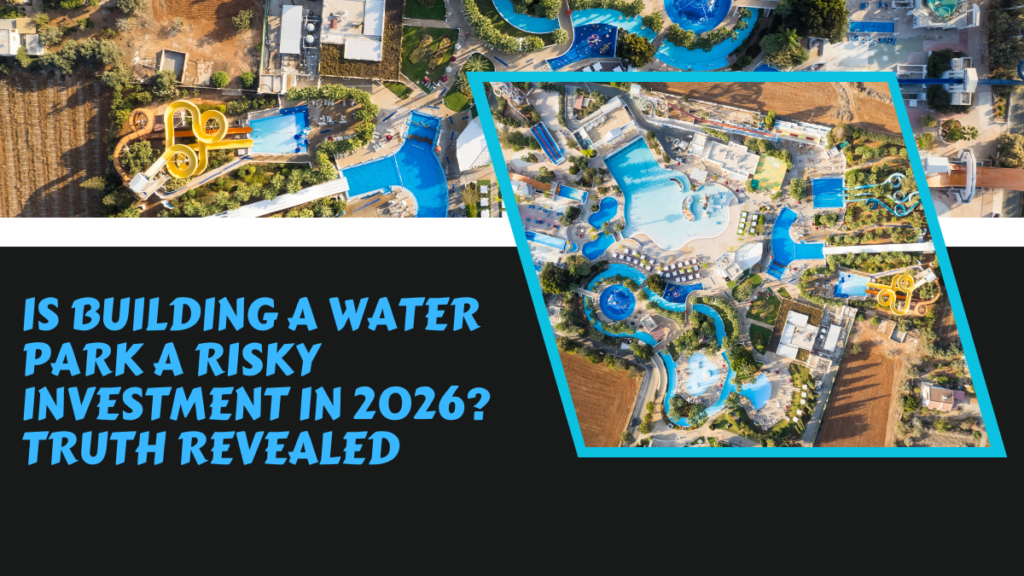
The idea of building a water park has always been exciting. It combines entertainment, tourism, and high revenue potential into one large-scale business opportunity. But in 2026, with changing consumer behavior, rising costs, and evolving entertainment trends, many investors are asking an important question:
Is building a water park still a smart move or a risky investment?
Let’s break down the truth, without hype or fear, so you can make an informed decision.
The Reality of the Water Park Industry in 2026
The entertainment and leisure industry in India is growing faster than ever. Urbanization, higher disposable income, and a demand for experiences over products are driving this growth.
Water parks, in particular, are seeing:
- Increased footfall in tier 1 and tier 2 cities
- Strong demand during peak seasons
- Rising popularity among families and young audiences
However, alongside this growth, competition and expectations have also increased. Visitors no longer want just slides and pools; they expect immersive, well-designed, and Instagram-worthy experiences.
This is where professional Theme Park Consulting Services and expert Theme park development Services play a crucial role.
Why People Think Water Parks Are Risky
Let’s address the concerns first.
1. High Initial Investment
Building a water park requires significant capital:
- Land acquisition
- Equipment and rides
- Construction and infrastructure
- Safety systems and water treatment
Without proper planning, costs can quickly spiral out of control.
2. Seasonal Revenue Challenges
In many regions, water parks operate at peak capacity only during summer. Off-season revenue can drop significantly if not managed well.
3. Operational Complexity
Running a water park involves:
- Maintenance of rides and pools
- Safety compliance
- Staffing and training
- Water and electricity consumption
A lack of expertise in these areas can increase operational risk.
4. Poor Planning = Failure
Many failed water parks share one common issue:
They were built without proper design strategy or market research.
This is why choosing the right Water Park Design Company and experienced consultants is critical.
The Truth: It’s Not Risky If Done Right
Here’s the reality:
Building a water park is not inherently risky. Poor planning is.
When executed with the right strategy, water parks can generate strong and consistent returns.
Let’s look at how successful projects minimize risk.
Smart Planning Reduces Risk
1. Strategic Space Planning
A well-designed park is not just about attractions—it’s about flow, capacity, and experience.
Strategic Space Planning ensures:
- Optimal land utilization
- Better visitor movement
- Higher spending per visitor
- Reduced congestion
This directly impacts profitability.
2. Professional Design & Concept Development
Modern parks are not just functional—they are themed experiences.
Using expert Theme Park Design Services helps create:
- Unique visual identity
- Engaging attractions
- Memorable guest experiences
Today, many developers are combining water parks with:
- Creative Indoor Playground Design zones
- Kids Play Area Design sections
- Hybrid attractions for all age groups
This diversification reduces dependency on a single audience.
3. Diversification = Stability
One major shift in 2026 is the move toward multi-attraction parks.
Instead of relying only on water rides, successful developers integrate:
- Adventure zones with an Adventure Park Design Company
- Night attractions like a Glow Garden Design Company concept
- Indoor attractions for year-round revenue
- Even cultural or educational spaces using Museums Design Company expertise
This approach ensures:
✔ Revenue beyond summer
✔ Broader audience reach
✔ Better ROI over time
New Trends Changing the Game
1. Indoor + Outdoor Hybrid Parks
Weather dependency is a major risk. To counter this, developers are combining:
- Water parks
- Indoor snow experiences (via a Snow Park Design Company)
- Entertainment zones
With proper Snow park development Services, you can create year-round attractions that balance seasonal dips.
2. Experience-Driven Design
Visitors today care about:
- Aesthetics
- Social media appeal
- Unique experiences
This is why modern parks are focusing on storytelling, themes, and immersive environments.
3. Smaller, Smarter Investments
Instead of massive parks, many investors are starting with:
- Mid-scale water parks
- Phased development models
- Add-on attractions over time
This reduces upfront risk and allows scaling based on performance.
ROI: What Can You Expect?
While returns depend on multiple factors, a well-executed water park can achieve:
- Break-even in 3–5 years
- Strong seasonal profits
- Additional revenue from food, events, and merchandise
But here’s the key:
ROI is driven more by design, planning, and execution than by size alone.
Common Mistakes to Avoid
If you want to reduce risk, avoid these:
- Ignoring market research
- Choosing the cheapest contractor instead of an experienced park design company
- Overbuilding without demand validation
- Lack of professional Theme park development Services
- Poor maintenance planning
These are the real reasons projects fail—not the industry itself.
Why Expert Guidance Matters
In 2026, the difference between success and failure often comes down to expertise.
Working with professionals ensures:
- Proper budgeting
- Efficient design
- Regulatory compliance
- Long-term sustainability
Companies like Snomusement are helping bridge this gap by offering end-to-end solutions from concept to execution.
With experience in multiple segments including water parks, indoor attractions, and hybrid entertainment zones, Snomusement helps investors minimize risk and maximize returns through smart planning and innovative design.
Is India Still a Good Market for Water Parks?
Absolutely.
India offers:
- A large young population
- Growing tourism
- Increasing demand for leisure activities
Tier 2 and Tier 3 cities, in particular, present huge untapped potential.
When supported by strong Theme Park Consulting Services, these locations can deliver excellent returns with lower competition.
Final Verdict: Risk or Opportunity?
So, is building a water park a risky investment in 2026?
Yes—if done blindly.
No—if done strategically.
The truth revealed is simple:
- The industry is growing
- Demand is strong
- Opportunities are real
But success depends on:
- Smart planning
- Professional design
- Diversified attractions
- Expert execution
Conclusion
Building a water park in 2026 is not about taking a gamble, it’s about making a calculated investment.
With the right approach, supported by expert Theme park development Services, creative design strategies, and modern concepts like hybrid entertainment zones, you can turn a water park into a highly profitable venture.
Partnering with experienced companies like Snomusement ensures that every aspect from Strategic Space Planning to execution is handled with precision, reducing risks and unlocking long-term success.