

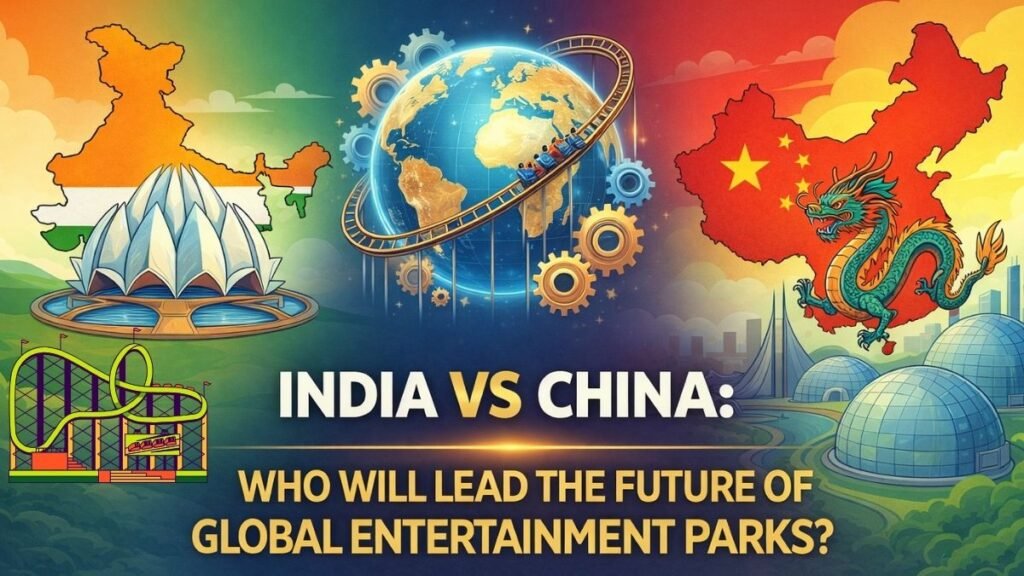
The global entertainment park industry is entering a decisive decade. As traditional markets in North America and Europe approach saturation, attention has shifted toward Asia, where rapid urbanization, population growth, and rising disposable incomes are fueling demand for immersive leisure destinations. Among Asian powerhouses, India and China stand out as the two most influential contenders shaping the future of entertainment parks worldwide.
Both nations bring unique strengths, challenges, and philosophies to the table. China is known for speed, scale, and government-backed infrastructure, while India is emerging as a creativity-driven market rooted in storytelling, cultural depth, and long-term sustainability. The competition is not just about building larger parks, but about who can define the next generation of experiences through innovation, cultural relevance, and strategic Museum Planning and Design as well as advanced entertainment ecosystems led by a capable Theme Park Design Company.
This article explores how India and China compare today and who is better positioned to lead the future of global entertainment parks.
The Global Shift Toward Experience-Driven Entertainment
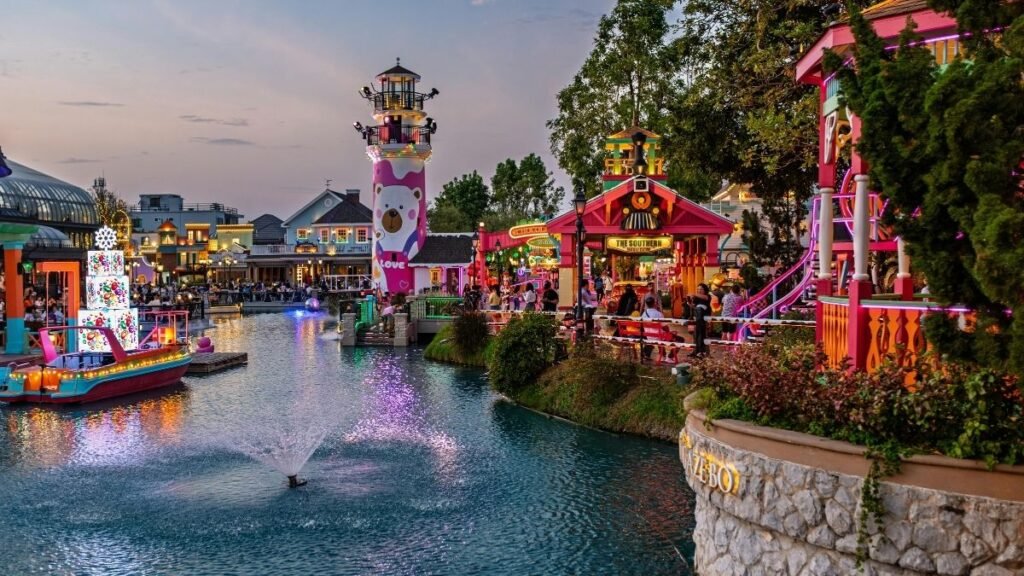
Modern audiences no longer visit parks only for rides. They seek meaningful experiences, emotional engagement, and interactive storytelling. Museums are transforming into experiential hubs, theme parks are integrating education and culture, and destinations are blending retail, entertainment, and digital layers.
This evolution has increased the importance of integrated Museum Planning and Design, where narrative flow, spatial psychology, and immersive technologies converge. Likewise, a forward-thinking Theme Park Design Company is now expected to deliver more than attractions—it must design environments that encourage repeat visits, social sharing, and cross-generational appeal.
Both India and China recognize this shift, but they are responding in distinctly different ways.
China’s Entertainment Park Strategy: Speed, Scale, and Replication
China’s rise as a global entertainment park giant has been rapid and intentional. Backed by strong government support and massive infrastructure investment, the country has built hundreds of large-scale theme parks, cultural parks, and hybrid entertainment districts within a relatively short time.
Strengths of the Chinese Model
- Rapid Execution: Projects move from concept to completion at unmatched speed.
- Large-Scale Investment: Mega parks spanning hundreds of acres are common.
- Global Partnerships: Collaborations with international brands and IP holders are frequent.
- Infrastructure Advantage: High-speed rail and urban connectivity increase accessibility.
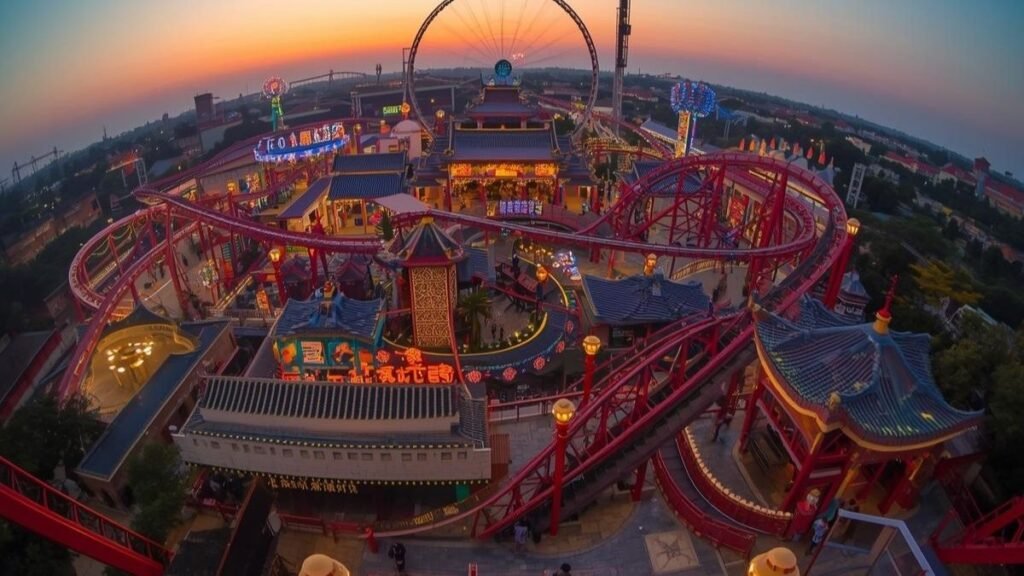
Chinese parks often prioritize visual spectacle and capacity, delivering grand architectural statements that attract millions of visitors annually. From massive cultural parks to futuristic entertainment cities, China’s ability to scale projects quickly is a major advantage.
Challenges Facing China
However, rapid growth comes with trade-offs:
- Experience Uniformity: Many parks share similar layouts and attraction styles.
- Lower Emotional Storytelling Depth: Experiences may lack nuanced cultural narratives.
- Sustainability Concerns: Oversupply in some regions has led to underperforming assets.
While China excels in construction and replication, the future of entertainment parks will depend less on quantity and more on originality, adaptability, and immersive storytelling.
India’s Entertainment Park Evolution: Culture, Creativity, and Context
India’s entertainment park industry is younger but evolving with a fundamentally different mindset. Rather than focusing solely on scale, India is building experiences rooted in history, mythology, education, and regional identity.
This approach places Museum Planning and Design at the core of many entertainment developments. Cultural museums, interpretation centers, heritage parks, and immersive storytelling attractions are increasingly becoming anchors for tourism-driven entertainment ecosystems.
Strengths of the Indian Model
- Cultural Depth: Thousands of years of history, mythology, and art provide endless narratives.
- Storytelling Expertise: Experiences often blend emotion, education, and entertainment.
- Flexible Development: Parks can be scaled to regional markets and diverse audiences.
- Cost Innovation: High-impact experiences are delivered with optimized budgets.
Indian developers are increasingly working with specialized consultants and a strategic Theme Park Design Company to ensure attractions are not just visually impressive but meaningful and memorable.
Challenges Facing India
- Longer Approval Cycles: Regulatory processes can slow execution.
- Infrastructure Gaps: Connectivity and utilities vary by region.
- Capital Constraints: Funding levels are generally lower than China’s mega-projects.
Despite these hurdles, India’s focus on authenticity and visitor engagement positions it well for long-term success.
Technology & Innovation: Two Different Paths
Technology is redefining how entertainment parks operate, from augmented reality to AI-driven personalization. Both India and China are investing heavily, but with different priorities.
China emphasizes cutting-edge hardware large LED installations, robotics, AI crowd control, and smart city integration. India, on the other hand, is focusing on content-driven technology, where digital tools enhance storytelling rather than overpower it.
This distinction is especially visible in modern Museum Design, where Indian projects often use projection mapping, interactive displays, and narrative-based AR to bring stories alive in an emotionally engaging way.
The future belongs not to technology alone, but to how seamlessly it integrates into the visitor journey.
The Role of Design Thinking in Future Parks
Design thinking is becoming the foundation of successful entertainment destinations. Visitors want intuitive navigation, emotional pacing, comfort, and inclusivity.
A capable Theme Park Design Company must now balance:
- Guest psychology
- Cultural storytelling
- Operational efficiency
- Revenue optimization
- Environmental sustainability
India’s design ecosystem is increasingly aligned with this philosophy, placing human experience at the center of planning. China’s industry is beginning to pivot as well, moving from replication toward more curated, story-led environments.
Mid-Point Industry Insight
At this critical juncture, specialized consultancies like snomusement are shaping how entertainment destinations evolve by integrating storytelling, spatial planning, and immersive engagement into cohesive experiences rather than isolated attractions.
This shift reflects a broader industry trend: success is no longer about who builds faster or bigger, but who designs smarter.
Sustainability and Longevity: The Real Deciding Factor
The next generation of entertainment parks must be sustainable financially, environmentally, and culturally.
China’s challenge will be managing oversupply and ensuring the long-term profitability of large assets. India’s challenge will be scaling responsibly while preserving creative authenticity.
Projects rooted in strong Museum Planning principles tend to age better, as they can be refreshed with new narratives without major structural changes. This adaptability is critical for future-proofing entertainment investments.
Global Appeal: Who Wins International Markets?
When exporting entertainment park expertise globally, adaptability matters more than scale. Countries in the Middle East, Africa, and Southeast Asia are seeking partners who understand cultural nuance, storytelling, and visitor psychology.
India’s strength lies in this adaptability, creating experiences that resonate across cultures while remaining cost-effective. China’s expertise remains attractive for mega-scale infrastructure-heavy developments.
The future global leader will likely be the one who balances both.
Final Verdict: India vs China
So, who will lead the future of global entertainment parks?
- China will continue to dominate in terms of scale, speed, and infrastructure-driven developments.
- India is poised to lead in creativity, storytelling, and experience-led destinations.
As the industry shifts toward immersive, meaningful, and sustainable entertainment, India’s strengths in narrative design, cultural integration, and visitor engagement may prove decisive.
In this evolving landscape, organizations offering Park Master Planning Services with deep storytelling expertise and operating as an Interactive Experience Design Company, such as snomusement, are well-positioned to influence how the next generation of global entertainment parks is imagined and delivered.