

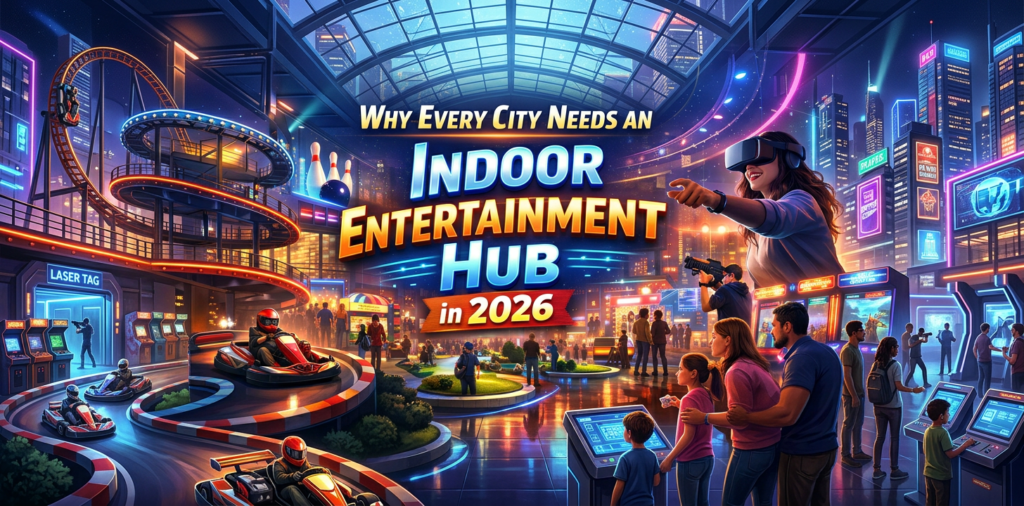
Cities are evolving faster than ever. With rising urban populations, shrinking open spaces, extreme weather conditions, and a growing demand for immersive leisure experiences, traditional entertainment formats are no longer enough. In 2026, the concept of entertainment is shifting from passive consumption to active, immersive, and experience-driven engagement.
This is exactly why every modern city, whether metropolitan or emerging, needs a well-planned indoor entertainment hub. From family entertainment centers (FECs) and theme-based attractions to snow parks, water parks, and interactive museums, indoor entertainment is becoming a cornerstone of urban lifestyle and economic growth.
In this blog, we’ll explore why indoor entertainment hubs are essential in 2026, how they impact cities economically and socially, and how expert Theme Park Consulting Services, Theme Park Design Company expertise, and Theme Park development Services play a critical role in building these future-ready spaces.
The Shift Toward Indoor Entertainment
Over the past decade, consumer behavior has changed dramatically. People are no longer satisfied with malls or standalone attractions they want multi-experience destinations.
Several factors are driving this shift:
- Extreme weather conditions (heat, rain, pollution)
- Increased demand for safe, controlled environments
- Growth of family-centric leisure activities
- Social media-driven “experience economy.”
Indoor entertainment hubs solve all of these challenges by offering year-round, climate-controlled, immersive experiences under one roof.
Urban Challenges That Indoor Hubs Solve
1. Limited Outdoor Space
Modern cities are facing severe land constraints. Parks and open recreational areas are shrinking due to rapid urbanization. Indoor hubs maximize land use by offering vertical and multi-level entertainment solutions.
With the help of a professional Theme Park Design Company, developers can transform compact spaces into high-revenue attractions through smart zoning, theming, and visitor flow planning.
2. Climate and Environmental Issues
In countries like India, extreme heat, monsoons, and air pollution often limit outdoor activities. Indoor entertainment hubs provide:
- Climate-controlled environments
- Clean and safe air quality
- Consistent visitor experience throughout the year
This is where specialized expertise, such as a Snow Park Design Company, becomes highly valuable, bringing unique, climate-independent attractions even to tropical regions.
3. Changing Consumer Expectations
Today’s audience, especially Gen Z and millennials, seek:
- Interactive experiences
- Instagrammable spaces
- Story-driven environments
Indoor hubs can integrate technology, storytelling, and design to create memorable, shareable experiences, increasing footfall and brand visibility.
Economic Impact on Cities
Indoor entertainment hubs are not just leisure spaces; they are economic engines.
Job Creation
From operations and maintenance to creative and technical roles, these hubs generate hundreds of direct and indirect jobs.
Boost to Local Economy
They attract:
- Tourists
- Families
- Corporate events
This increases revenue for nearby businesses, such as hotels, restaurants, and retail outlets.
Real Estate Value Growth
Properties near entertainment hubs often appreciate. Developers increasingly collaborate with Theme park development Services providers to integrate entertainment into mixed-use developments.
The Rise of Multi-Experience Destinations
In 2026, successful projects are no longer single attractions; they are integrated entertainment ecosystems.
A typical indoor entertainment hub may include:
- Snow parks
- Indoor theme parks
- Soft play zones
- VR & AR gaming areas
- Interactive museums
- Food courts & retail
This integrated model ensures:
- Longer visitor stay
- Higher per capita spending
- Repeat visits
Expert planning by a Theme Park Consulting Services provider ensures all these elements work together seamlessly.
Role of Design and Storytelling
Design is no longer just about aesthetics it’s about experience engineering.
A professional Theme Park Design Company focuses on:
- Visitor journey mapping
- Thematic storytelling
- Sensory engagement (light, sound, texture)
- Space optimization
For example, a well-designed indoor hub can guide visitors naturally from one attraction to another, increasing engagement and revenue.
The Growing Demand for Specialized Attractions
Snow Parks
Snow parks are becoming one of the most attractive indoor concepts in warm regions. A specialized Snow Park Design Company can create:
- Artificial snow environments
- Ice slides and sculptures
- Winter-themed experiences
These attractions offer a unique value proposition that differentiates a project from competitors.
Theme Parks
Indoor theme parks are evolving with:
- Motion rides
- Interactive zones
- Digital integrations
With the help of Theme park development Services, developers can build scalable and future-ready attractions.
Museums and Edutainment Spaces
Modern museums are no longer static they are interactive and immersive.
A professional Museums Design Company can transform traditional exhibits into engaging storytelling spaces using:
- Projection mapping
- Touch-based interaction
- AR/VR technology
This appeals to both educational institutions and families.
Water-Based Attractions
Indoor water attractions are gaining popularity for their year-round usability.
With expert Water Park Development Services, projects can include:
- Indoor water slides
- Wave pools
- Kids splash zones
These attractions significantly increase family footfall and the revenue potential.
Technology Integration: The Game Changer
Technology is at the heart of modern indoor entertainment hubs.
Key integrations include:
- AI-based crowd management
- Smart ticketing systems
- Augmented & Virtual Reality
- Interactive gaming zones
These innovations enhance user experience and improve operational efficiency.
Why Cities Must Invest Now
Cities that invest in indoor entertainment today will gain a competitive advantage in tourism and lifestyle infrastructure.
Key Benefits:
- Increased tourism
- Higher city branding
- Improved quality of life
- Economic diversification
Governments and private developers are increasingly collaborating with Theme Park Consulting Services experts to plan large-scale entertainment projects.
The Role of Expert Companies
Building a successful indoor entertainment hub is not just about construction; it requires strategic planning, design, and execution.
This is where companies like Snomusement play a crucial role.
What Sets Snomusement Apart?
Snomusement brings a comprehensive approach to entertainment development:
- Concept development
- Feasibility studies
- Master planning
- 3D visualization
- End-to-end execution support
Their expertise spans across:
- Snow park design
- Theme park planning
- Indoor entertainment centers
- Museum and edutainment spaces
- Water park development
By combining creativity with technical precision, Snomusement helps transform ideas into high-performing entertainment destinations.
Future Trends in Indoor Entertainment
Looking ahead, several trends will shape the industry:
Immersive Experiences
Visitors will expect fully immersive environments that blend the physical and digital worlds.
AI & Personalization
Experiences will be tailored based on user preferences and behavior.
Sustainability
Energy-efficient systems and eco-friendly materials will become standard.
Social Media Integration
Designs will focus on creating “viral moments” that drive organic marketing.
Conclusion
Indoor entertainment hubs are no longer optional; they are essential infrastructure for modern cities.
They solve urban challenges, boost local economies, enhance quality of life, and create unforgettable experiences for people of all ages.
However, the success of such projects depends heavily on expert planning and execution. From Theme Park Consulting Services to Theme Park Development Services, from a specialized Snow Park Design Company to a creative Museums Design Company, every element must be strategically aligned.
As cities continue to evolve in 2026 and beyond, those that invest in well-designed indoor entertainment hubs partnering with experienced companies like Snomusement will lead the way in shaping the future of urban entertainment.
Final Thought
If you’re planning to develop an indoor entertainment hub, now is the time to act. The demand is growing, the market is evolving, and the opportunity is massive.
The only question is, will your city lead or follow?