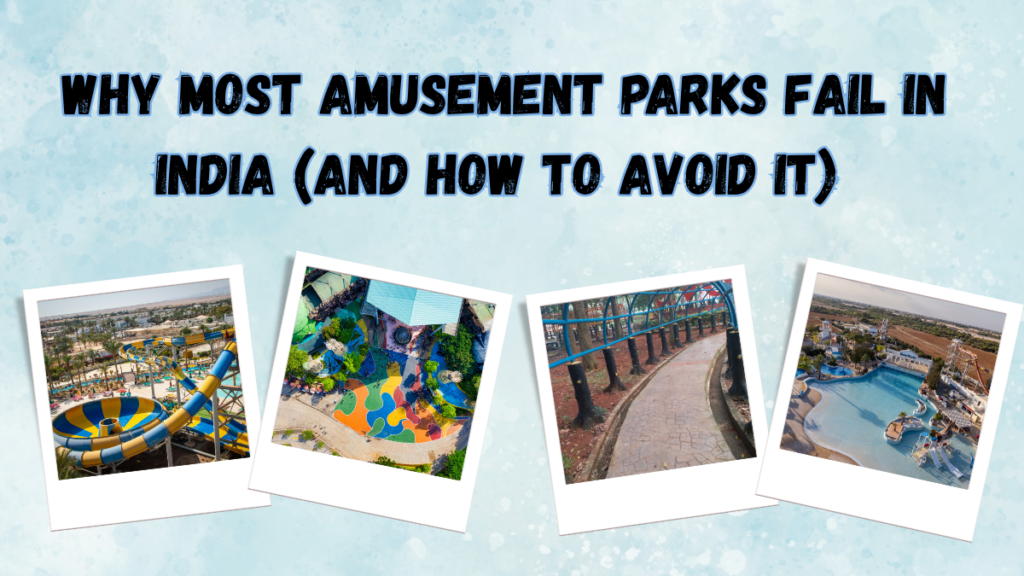
India’s entertainment industry is booming. With rising disposable incomes, urban expansion, and a growing demand for experiential leisure, amusement parks, water parks, and indoor entertainment centers are gaining popularity nationwide.
Yet, despite the opportunity, a surprising number of amusement parks in India struggle to survive—or fail completely within a few years.
Why does this happen?
More importantly, how can investors and developers avoid these costly mistakes?
Let’s break it down.
The Harsh Reality of Amusement Park Failures in India
At first glance, building an amusement park seems like a profitable venture. Large crowds, ticket sales, food courts, and events—everything points toward strong revenue potential.
However, the reality is far more complex.
Many projects fail due to poor planning, lack of expertise, and misunderstanding of market dynamics. Unlike traditional real estate, entertainment projects require a deep understanding of user psychology, design flow, and long-term operational strategy.
This is where professional Theme Park Consulting Services and expert planning become critical.
Top Reasons Why Most Amusement Parks Fail
1. Poor Market Research & Location Strategy
One of the biggest mistakes developers make is choosing the wrong location.
An amusement park cannot succeed just because land is cheap or available. It needs:
- Strong connectivity
- High footfall potential
- Target audience alignment
Without proper feasibility studies, even the best-designed parks can fail.
2. Weak Concept & Lack of Differentiation
Many parks in India look and feel the same—generic rides, basic layouts, and no unique theme.
Today’s audience wants experiences, not just rides.
Whether it’s a snow-themed attraction, immersive museum, or a glow garden, uniqueness is what drives repeat visits.
A professional Theme Park Design Services approach ensures that your park stands out with a strong concept, storytelling, and visitor engagement strategy.
3. Poor Design & Visitor Flow
Design is not just about aesthetics—it directly impacts revenue.
Common issues include:
- Long waiting times
- Poor crowd movement
- Underutilized spaces
- Confusing layouts
Without proper Strategic Space Planning, visitors get frustrated, spend less time, and reduce overall spending.
A well-designed park guides visitors smoothly, maximizes engagement, and increases per capita revenue.
4. Underestimating Costs & Overestimating ROI
Many investors enter the industry with unrealistic expectations.
They:
- Underestimate development costs
- Ignore maintenance expenses
- Overestimate ticket revenue
This leads to financial stress and operational challenges within the first few years.
Working with experts in Theme park development Services helps create realistic budgets, ROI projections, and phased investment strategies.
5. Lack of Professional Expertise
Entertainment parks are highly specialized projects.
You need expertise in:
- Design
- Engineering
- Safety compliance
- Operations
Relying on general contractors instead of a specialized park design company often results in poor execution.
6. Ignoring Changing Consumer Trends
Today’s audience is evolving rapidly.
Traditional amusement parks are no longer enough. People now prefer:
- Indoor entertainment zones
- Snow parks
- Interactive museums
- Themed attractions
This is why services like Creative Indoor Playground Design, Kids Play Area Design, and immersive environments are gaining popularity.
7. Poor Marketing & Branding
Even a great park can fail without proper marketing.
Many developers:
- Don’t build a strong brand
- Ignore digital marketing
- Fail to create social media buzz
In today’s digital-first world, visibility is everything.
How to Avoid Failure (Smart Strategies for Success)
Now that we understand the problems, let’s look at how to build a successful and profitable amusement park in India.
1. Start with a Strong Concept
Your concept is your foundation.
Instead of building a generic park, focus on:
- Unique themes
- Target audience experience
- Story-driven design
For example:
- Snow-based attractions by a Snow Park Design Company
- Nature-inspired attractions like a Glow Garden Design Company concept
- Adventure-based experiences by an Adventure Park Design Company
A strong concept creates emotional connection and drives repeat visits.
2. Invest in Expert Planning & Consulting
This is the most important step.
Professional Theme Park Consulting Services help you:
- Conduct feasibility studies
- Define the right concept
- Plan layout and zoning
- Optimize budget and ROI
Companies like Snomusement specialize in end-to-end entertainment solutions—from concept to execution ensuring your project is built on a solid foundation.
3. Focus on Strategic Space Planning
A successful park is not just about attractions—it’s about how everything connects.
With proper Strategic Space Planning, you can:
- Improve visitor flow
- Increase dwell time
- Boost spending per visitor
Every square foot should be designed for experience and profitability.
4. Diversify Your Attractions
Don’t rely on just one type of attraction.
Modern parks combine multiple experiences:
- Water rides from a Water Park Design Company
- Indoor play zones
- Adventure areas
- Museums and interactive zones
You can even include:
- Museums Design Company concepts for educational entertainment
- Adventure Park Development Services for thrill seekers
Diversification ensures broader audience appeal.
5. Choose the Right Development Partner
Execution is everything.
Working with an experienced team offering Snow park development Services or complete park development ensures:
- Quality construction
- Safety compliance
- Efficient timelines
A trusted partner like Snomusement can handle everything from design to final delivery—reducing risks and ensuring high standards.
6. Plan for Long-Term Operations
Success doesn’t end with launch.
You need:
- Maintenance strategy
- Staff training
- Seasonal planning
- Continuous upgrades
Entertainment trends evolve, and your park should too.
7. Build a Strong Brand & Marketing Strategy
Marketing should start before your park opens.
Focus on:
- Social media campaigns
- Influencer marketing
- Pre-launch buzz
- Event-based promotions
A strong brand creates anticipation and drives footfall from day one.
The Future of Amusement Parks in India
India’s entertainment industry is entering a new era.
The future lies in:
- Immersive experiences
- Indoor entertainment hubs
- Themed environments
- Technology-driven attractions
From snow parks to interactive museums, the demand is shifting toward innovative and engaging spaces.
Developers who adapt to these trends and invest in the right expertise—will lead the market.
Final Thoughts
Amusement parks in India don’t fail because the opportunity is weak—they fail because of poor planning, lack of expertise, and outdated concepts.
The good news?
Every one of these challenges can be avoided.
With the right strategy, expert guidance, and a focus on experience-driven design, your project can become a long-term success.
Whether you’re planning a theme park, water park, or indoor entertainment center, working with professionals in Theme Park Consulting Services, Theme Park Development Services, and specialized solutions like Snow Park Design Company or Creative Indoor Playground Design can make all the difference.