

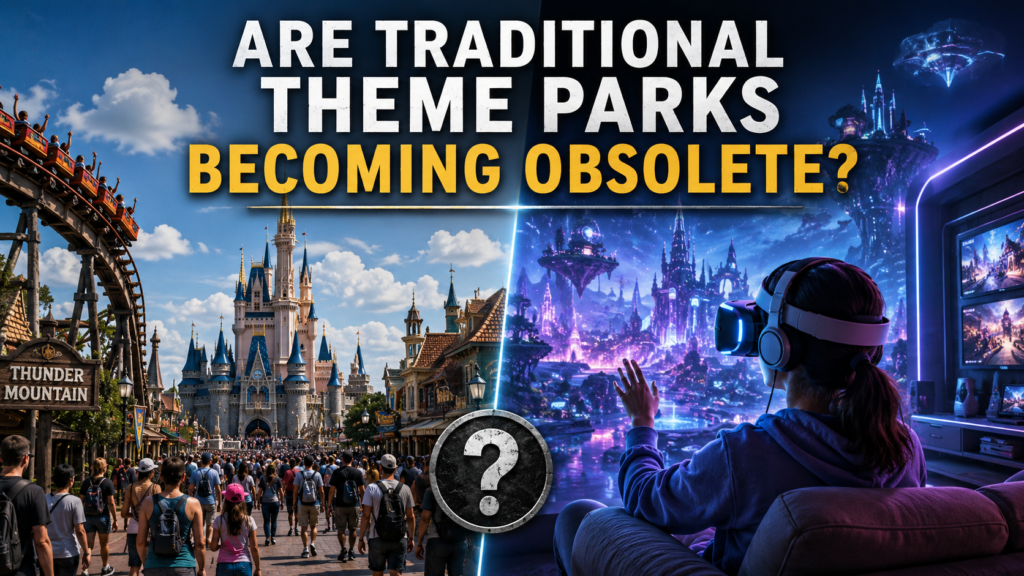
For decades, theme parks have been defined by towering roller coasters, mechanical rides, and large-scale attractions. They were built on a simple formula: bigger rides, bigger crowds, and bigger profits. But as visitor expectations evolve, a controversial question is emerging across the entertainment industry:
Are traditional theme parks becoming obsolete?
While many industry leaders may disagree, there is growing evidence that today’s audiences are seeking something entirely different. They are no longer satisfied with simply riding attractions—they want to become part of the experience.
The Shift from Thrill-Seeking to Experience-Seeking
Modern visitors, especially younger generations, prioritize memorable experiences over passive entertainment. Social media has accelerated this trend by encouraging people to seek attractions that are unique, immersive, and shareable.
A roller coaster may deliver excitement for two minutes, but an interactive experience that allows visitors to participate, explore, and create memories can leave a lasting impression for years.
This shift is forcing entertainment developers to rethink what visitors truly value.
Bigger Rides Don’t Always Mean Bigger Returns
For years, many parks competed by investing millions into larger and faster rides. While these attractions continue to attract visitors, they also come with significant challenges:
- High maintenance costs
- Increased operational expenses
- Long construction timelines
- Limited flexibility for future upgrades
Meanwhile, immersive attractions, interactive museums, snow parks, themed environments, and digital experiences often provide greater adaptability while delivering strong visitor engagement.
The question investors are beginning to ask is simple:
Is spending millions on one ride still the smartest strategy?
The Rise of Immersive Entertainment
Around the world, entertainment venues are increasingly investing in storytelling-driven attractions rather than traditional ride-focused developments.
Visitors now expect:
- Interactive exhibits
- Projection mapping experiences
- Virtual and augmented reality attractions
- Multi-sensory environments
- Gamified entertainment spaces
- Immersive themed destinations
These attractions encourage visitors to spend more time engaging with the environment instead of simply waiting in line for the next ride.
Museums Are Becoming More Exciting Than Theme Parks
This statement may sound controversial, but many modern museums are generating significant visitor interest through technology and immersive storytelling.
Interactive museums now combine education, entertainment, and participation. Visitors can touch, explore, interact, and influence the experience rather than simply observing displays.
As a result, museums are attracting audiences who might not traditionally visit educational attractions.
The line between education and entertainment is rapidly disappearing.
Why Investors Are Paying Attention
From a business perspective, immersive attractions often offer advantages that traditional rides cannot.
These experiences can:
- Generate repeat visitation
- Encourage social media sharing
- Adapt to changing trends
- Require less physical space
- Deliver stronger emotional engagement
For investors and developers, these factors create opportunities to build attractions that remain relevant for longer periods while maintaining visitor interest.
The Real Future Is Not Rides vs. Experiences
Perhaps the biggest misconception is that traditional rides and immersive attractions must compete with each other.
The most successful entertainment destinations of the future will likely combine both.
Thrill rides will continue to attract visitors, but storytelling, technology, and interactive experiences will increasingly become the reasons people stay longer, return more often, and share their experiences online.
Conclusion
Traditional theme parks are not disappearing anytime soon. However, the entertainment industry is undergoing a significant transformation. Visitors are demanding more than speed, height, and adrenaline. They want meaningful experiences, immersive storytelling, and active participation.
The real controversy is not whether traditional theme parks will survive it is whether operators who fail to evolve alongside changing visitor expectations will remain competitive in the future.