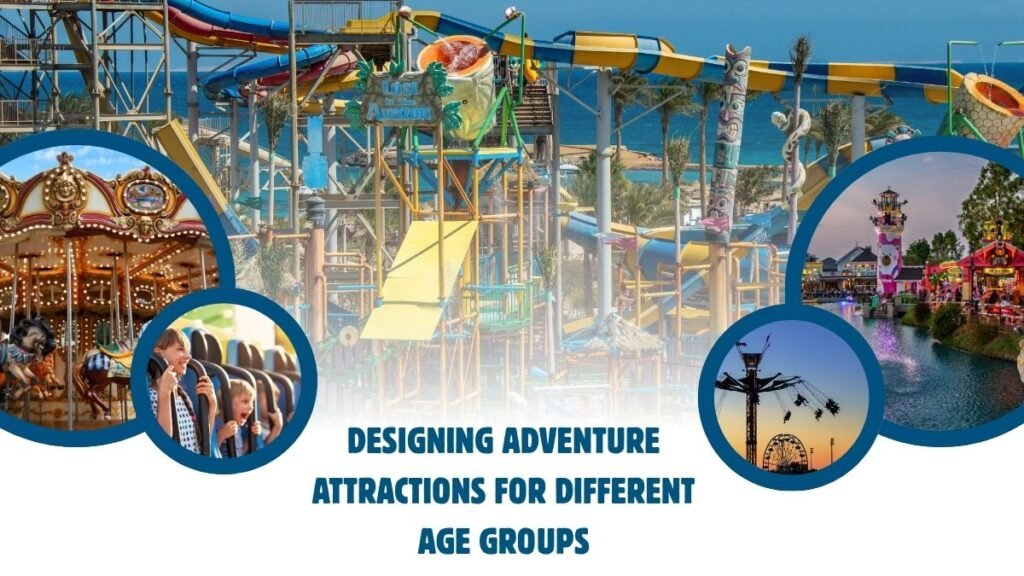
When building an adventure attraction, the biggest mistake an investor can make is trying to build a “one-size-fits-all” playground. Human beings change drastically as they grow. A four-year-old child is still developing basic balance and motor skills. A fourteen-year-old is looking for high-adrenaline thrills to test their physical limits and impress their peers. An adult asset-buyer or parent is looking for a mix of physical challenge, absolute safety, and comfort.
If an adventure park is too difficult, young children will become frustrated, experience injuries, or refuse to play. If it is too easy, teenagers and adults will get bored within minutes and leave the facility.
To build a highly profitable, sustainable destination, developers must design with age-appropriate ergonomics and psychology in mind. Every obstacle, rope course, zip line, and climbing wall must be engineered to match the specific physical measurements and mental milestones of its target user.
1. Toddlers and Early Childhood (Ages 2 to 5): The Sensory Discovery Phase
For the youngest demographic, adventure is not about heights or speed. It is about discovering what their bodies can do. Children in this age bracket are developing gross motor skills, learning how to jump, balance on one foot, climb low steps, and handle different physical textures.
When an expert park design company creates spaces for toddlers, the engineering focuses on low-risk, high-tactile exploration.
- Low Center of Gravity: All play surfaces must remain close to the ground, typically no more than 2 feet high. This eliminates the risk of dangerous falls while still allowing young children to feel like they are climbing.
- Soft and Forgiving Materials: Hard metals and treated woods are replaced with high-density foam wrapped in heavy-duty vinyl, smooth plastics, and natural rubber.
- Tactile Variety: The attractions should include elements such as soft-crawling tunnels, mini-bridge crossings, and low-climbing slopes with large, easy-to-grip holds.
To capture this demographic successfully, operators invest heavily in specialized Kids Play Area Design. By focusing on early childhood mechanics within a Creative Indoor Playground Design, a venue becomes a primary destination for parents looking for safe weekday activities, driving steady foot traffic during off-peak morning hours.
2. Primary School Explorers (Ages 6 to 12): The Step-Up Challenge
This age group represents the core audience for many family entertainment destinations. Children between 6 and 12 years old have mastered basic balance and possess significant physical energy. Psychologically, they are developing independence. They want to prove they can complete challenges without a parent holding their hand, but they are not yet ready for extreme, high-altitude thrills.
Design strategies for this middle tier require a “step-up” approach to difficulty:
- Introduction to Elevation: Play structures can safely be elevated, often featuring multi-level climbing networks, netted bridges, and enclosed tube slides.
- Tactile Skill Testing: Obstacles shift from simple crawling zones to elements that require coordination and strength, such as cargo-net climbs, low-altitude zip lines, and basic rope-balancing tracks.
- Continuous Safety Systems: Because children in this bracket can occasionally act impulsively, the engineering relies on passive safety systems. This includes fully enclosed safety netting or continuous-belay tracks where the child is locked into a safety line at the start of the course and cannot physically unhook themselves until they reach the end.
3. Teenagers and Adults (Ages 13 and Above): The Adrenaline Seekers
Once visitors cross into the teenage and adult demographic, their psychological needs shift entirely. They are no longer interested in simple play; they crave authentic thrills, competition, and a sense of genuine accomplishment. They want an experience that challenges their strength, endurance, and mental focus.
To serve this high-paying demographic, an investor must work with an experienced Adventure Park Design Company that can deliver professional Adventure Park Development Services.
- Extreme Verticality and Scale: Attractions for this group move high into the air. This includes high-altitude ropes courses spanning multiple levels, vertical climbing walls with varying difficulty paths, and long, high-speed zip lines.
- Active Safety Participation: Unlike younger groups, older participants can be trained to manage their own safety gear. They use smart-locking carabiners and dual-communicating harness systems, which increase their sense of personal responsibility and heighten their sense of adventure.
- Competitive and Time-Based Elements: Teenagers and adults love to compare their skills. Integrating digital timers, twin-track racing zip lines, or “ninja warrior” obstacle courses encourages friendly competition and drives repeat visits as guests try to beat their friends’ scores.
4. The Science of Scale: Anthropometrics and Ergonomics
You cannot design an adventure course based on guesswork. Engineers use a science called anthropometrics, the study of the physical dimensions and proportions of the human body across different age groups.
When blueprinting an adventure park, these measurements dictate the exact placement of every structural element:
- Reach Zones and Grabbing Distances: The distance between a safety rope and a foot cable must match the average arm and leg reach of the specific age group using that zone. If a foot cable is placed too far below a handrail, a child will not be able to bridge the gap, which can cause them to freeze on the course.
- Step Heights and Riser Dimensions: The vertical distance between steps or climbing pegs must match human stride lengths. Toddlers require tiny, incremental steps, while adults need wider spacing to feel challenged.
- Harness and Anchor Point Engineering: The guest’s physical weight and torso length shift the center of gravity within a safety harness. Anchor points on zip lines and ropes courses must be calculated to ensure that when a guest slips or falls, the safety line catches them smoothly without causing sudden whiplash or body flipping.
5. Strategic Zonation: Preventing Demography Collisions
Once the individual age attractions are designed, the developer faces a major layout challenge: how to arrange these distinct zones inside a single facility. This requires rigorous Strategic Space Planning.
If your layout forces hyperactive teenagers to sprint through the same hallways where toddlers are learning to walk, you create a high-risk environment for collisions, accidents, and parental anxiety.
- Physical Separation: High-energy adult adventure zones should be physically separated from early childhood spaces. This can be achieved using natural architectural boundaries, such as seating areas, retail shops, or structural columns.
- Graduated Progression: A highly effective layout uses a graduated flow. As a visitor moves deeper into the facility, the attractions gradually increase in height, difficulty, and age requirements.
- Centralized Observation Hubs: Parents need a clear, comfortable space to watch their children play without obstructing traffic. Designing central seating zones with unobstructed sightlines allows parents to supervise multiple age zones simultaneously.
6. Building a Multi-Generational Entertainment Ecosystem
To maximize the financial return on a large-scale commercial property, developers rarely stop at building a standalone adventure park. Instead, they combine multiple specialized entertainment concepts onto a single footprint to create an all-weather, multi-generational destination.
By utilizing comprehensive Theme Park Design Services and advanced Theme Park development Services, master planners can weave distinct attraction types into a unified business ecosystem:
- Climate-Controlled Novelty: To drive footfall during intense summer heat or cold monsoon seasons, investors often build indoor winter attractions right alongside active adventure tracks. Partnering with a specialized Snow Park Design Company using advanced Snow park development Services allows properties to offer real snow play, ice sliding, and sub-zero environments that appeal to all age groups.
- Aquatic Attractions: For outdoor or resort developments, working with a professional Water Park Design Company ensures that massive wave pools, lazy rivers, and high-velocity waterslides are engineered safely alongside dry climbing courses, capturing maximum summer revenue.
- Visual and Narrative Walkthroughs: To attract older adults, grandparents, and tourists who prefer non-physical entertainment, properties implement unique visual installations. This includes working with a Glow Garden Design Company to build beautiful night-time light trails, or collaborating with a Museums Design Company to build interactive, story-driven educational galleries.
By blending these diverse assets through expert Theme Park Consulting Services, developers ensure that every single family member, from a two-year-old toddler to a seventy-year-old grandparent, has a dedicated, high-value reason to remain on the property for an entire day.
Engineer High-Yield Destinations with Snomusement
Designing and executing a world-class adventure park requires a precise balance of human psychology, rigorous structural engineering, and precise space planning. If an attraction is built without proper age-appropriate metrics or clear crowd zonation, the facility will face operational bottlenecks, high maintenance costs, and an increased risk of guest injury.
If you are an investor, real estate developer, or commercial property owner looking to build a highly secure, profitable, and multi-generational entertainment destination, Snomusement is your trusted B2B partner. We operate as India’s premier entertainment infrastructure consultancy and development brand, turning complex human engineering and bold architectural visions into highly successful commercial realities.
Our elite cross-disciplinary team provides end-to-end consulting, technical execution, and master planning across all specialized attraction sectors, including:
- High-thrill structural layouts engineered by an established Adventure Park Design Company offering full Adventure Park Development Services.
- In-depth corporate feasibility studies, market mapping, and strategy through Theme Park Consulting Services.
- Advanced master planning, theming, and schematic creation driven by Theme Park Design Services and full Theme Park development Services.
- Acoustic zoning, traffic flow management, and age-group separation are managed via Strategic Space Planning.
- Safe, ergonomic family spaces utilizing advanced Kids Play Area Design and Creative Indoor Playground Design.
- Sub-zero mechanical engineering and climate isolation led by a trusted Snow Park Design Company providing comprehensive Snow park development Services.
- Advanced water-recirculation systems and aquatic slide layouts from a specialized Water Park Design Company.
- Vibrant, high-margin evening lightscapes created by a leading Glow Garden Design Company.
- Interactive, story-driven educational exhibits curated by an expert museum design company.
At Snomusement, we eliminate development risk by focusing on strict technical authority, absolute structural safety, and verified market economics. We ensure your facility is engineered to maximize guest dwell time, minimize operational overhead, and deliver an outstanding, long-term return on investment.
Contact Snomusement today to schedule your corporate project feasibility, age-zone design, and space planning consultation.