

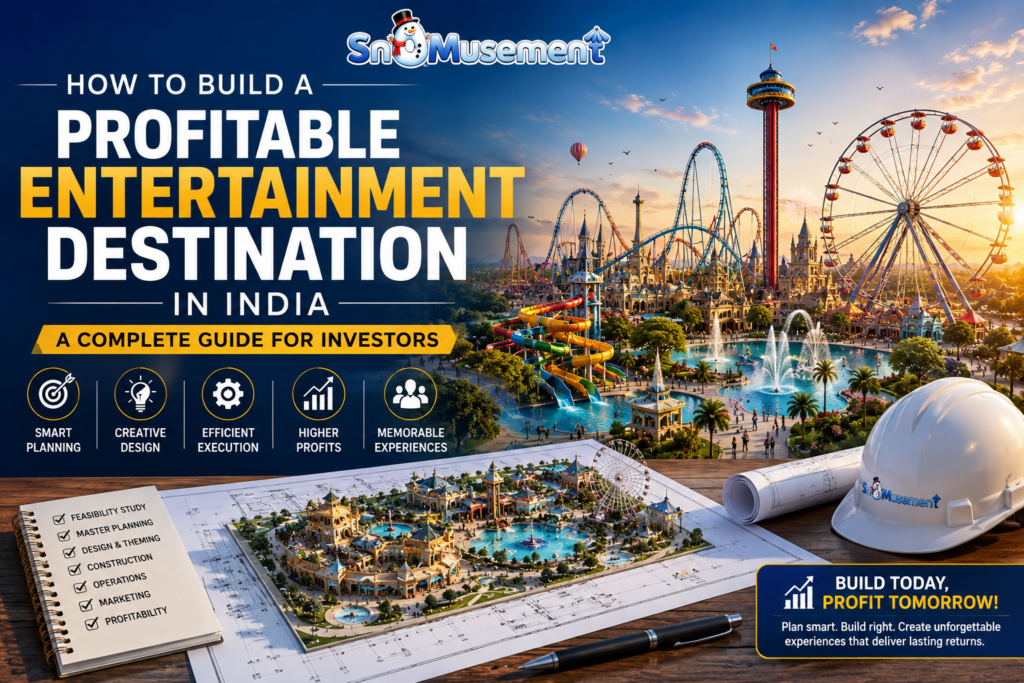
India’s entertainment and tourism industry is experiencing remarkable growth. Rising disposable incomes, expanding domestic tourism, and increasing demand for family-friendly experiences have created new opportunities for investors looking to develop theme parks, water parks, snow parks, family entertainment centers, museums, adventure parks, and immersive attractions.
However, building a successful entertainment destination requires much more than purchasing land and installing attractions. The most profitable destinations are carefully planned, strategically designed, and built around memorable visitor experiences that encourage repeat visits.
This guide explains every major step involved in developing a profitable entertainment destination in India, from selecting the right location to creating long-term revenue streams.
Why India’s Entertainment Industry Is Growing Rapidly
Several factors are driving investment in entertainment infrastructure:
- Growth in domestic tourism
- Higher spending on leisure and recreation
- Expansion of Tier-2 and Tier-3 cities
- Demand for experiential entertainment
- Government support for tourism development
- Growth of mixed-use commercial projects
Today’s visitors are looking for destinations that combine entertainment, dining, retail, events, and interactive experiences rather than standalone attractions.
Step 1: Define Your Entertainment Concept
Every successful project begins with a clear vision.
Popular entertainment concepts include:
- Theme Parks
- Water Parks
- Indoor Snow Parks
- Family Entertainment Centers (FECs)
- Adventure Parks
- Experience Centers
- Museums
- Science Centers
- Aquarium & Oceanarium Projects
- Glow Gardens
- Mixed-Use Entertainment Districts
Choose a concept that matches local demand, investment capacity, climate, and target audience.
Step 2: Conduct a Professional Feasibility Study
A feasibility study reduces investment risks and validates the business opportunity before construction begins.
A comprehensive study should evaluate:
- Market demand
- Visitor demographics
- Tourism potential
- Competitor analysis
- Accessibility
- Investment requirements
- Revenue projections
- Operational costs
- Return on Investment (ROI)
Skipping this step often leads to poor attendance and financial losses.
Step 3: Select the Right Location
Location significantly influences visitor numbers.
Ideal locations offer:
- Excellent highway connectivity
- Strong population density
- Nearby tourist attractions
- Hotel availability
- Public transportation access
- Future urban development
Destinations near expanding cities often perform better due to increasing residential and commercial growth.
Step 4: Develop a Strong Master Plan
Master planning is the foundation of every successful entertainment destination.
A professional master plan determines:
- Land utilization
- Visitor circulation
- Attraction placement
- Parking
- Landscape design
- Utilities
- Food courts
- Retail spaces
- Event areas
- Future expansion zones
An effective layout minimizes congestion while maximizing visitor engagement.
Step 5: Design Experiences, Not Just Attractions
Modern visitors seek immersive experiences rather than isolated rides.
Consider integrating:
- Interactive storytelling
- Themed architecture
- Digital installations
- Projection mapping
- Sound and lighting effects
- Seasonal festivals
- Live performances
- Character interactions
- Instagram-worthy photo spots
These features increase guest satisfaction and encourage repeat visits.
Step 6: Build Multiple Revenue Streams
Ticket sales alone rarely maximize profitability.
Diversify income through:
- Food and beverage outlets
- Merchandise stores
- Premium experiences
- VIP packages
- Birthday parties
- Corporate events
- Educational programs
- Membership plans
- Annual passes
- Sponsorship opportunities
- Paid photography
- Parking fees
Multiple revenue channels improve financial stability throughout the year.
Step 7: Prioritize Visitor Experience
A positive visitor experience drives repeat business and word-of-mouth marketing.
Focus on:
- Comfortable walkways
- Clean facilities
- Efficient queue management
- Clear signage
- Family-friendly amenities
- Accessibility
- Digital ticketing
- Mobile payment options
- Guest support services
Satisfied visitors become loyal customers and brand ambassadors.
Step 8: Invest in Safety and Compliance
Safety is essential for protecting guests and maintaining your reputation.
Implement:
- Regular ride inspections
- Emergency response plans
- Fire safety systems
- CCTV surveillance
- Medical facilities
- Staff training
- Preventive maintenance
- Regulatory compliance
A strong safety culture builds trust among visitors.
Step 9: Incorporate Technology
Technology improves operations and enhances guest experiences.
Useful innovations include:
- Online booking platforms
- RFID wristbands
- Mobile applications
- Digital wayfinding
- Cashless payments
- Visitor analytics
- AI-powered customer support
- Smart maintenance systems
Data-driven decisions help optimize operations and improve profitability.
Step 10: Create Memorable Theming
Theming transforms ordinary spaces into unforgettable destinations.
Successful themes can include:
- Ancient civilizations
- Fantasy worlds
- Nature-inspired environments
- Space exploration
- Underwater adventures
- Cultural heritage
- Futuristic cities
Consistent theming enhances storytelling and strengthens your brand identity.
Step 11: Develop a Strong Marketing Strategy
Marketing should begin before construction is complete.
Key channels include:
- Search engine optimization (SEO)
- Social media campaigns
- Influencer collaborations
- Local tourism partnerships
- Google Business Profile
- Digital advertising
- PR campaigns
- Email marketing
- Video content
- Seasonal promotions
Pre-launch campaigns help generate excitement and early bookings.
Step 12: Hire Experienced Industry Consultants
Entertainment projects involve architecture, engineering, operations, technology, visitor psychology, and business planning.
Working with experienced consultants helps reduce costly mistakes while improving project quality.
Professional consultants can assist with:
- Feasibility studies
- Master planning
- Concept development
- Attraction planning
- Architectural design
- Visitor flow optimization
- Financial planning
- Construction coordination
Early expert involvement often leads to better long-term returns.
Common Mistakes Investors Should Avoid
Many projects struggle because of preventable errors such as:
- Choosing the wrong location
- Poor market research
- Weak master planning
- Underestimating operational costs
- Overbuilding attractions
- Ignoring visitor comfort
- Limited marketing
- Inadequate maintenance planning
- Lack of future expansion space
Avoiding these mistakes significantly improves project success.
Why Sustainability Matters
Modern entertainment destinations increasingly adopt sustainable practices.
Consider:
- Solar power systems
- Rainwater harvesting
- Energy-efficient lighting
- Smart irrigation
- Waste management
- Eco-friendly materials
- Native landscaping
Sustainability reduces operating costs while appealing to environmentally conscious visitors.
The Importance of Long-Term Planning
Profitable destinations evolve over time.
Plan for:
- New attractions
- Seasonal events
- Expansion phases
- Technology upgrades
- Changing visitor preferences
- New revenue opportunities
Continuous innovation keeps visitors returning year after year.
How Snomusement Helps Bring Entertainment Projects to Life
Developing an entertainment destination requires expertise across planning, design, engineering, and execution. Snomusement works with investors, developers, tourism authorities, and private organizations to deliver end-to-end consulting and development solutions for entertainment and tourism projects.
Its services include feasibility studies, concept development, master planning, architecture, attraction planning, theming, immersive experience design, visitor flow optimization, and turnkey project support. By aligning creative vision with commercial viability, Snomusement helps clients build destinations designed for long-term success.
Whether the project is a snow park, theme park, water park, adventure attraction, family entertainment center, museum, or experience center, careful planning from the earliest stages can significantly improve outcomes.
Conclusion
Building a profitable entertainment destination in India is both an exciting opportunity and a complex undertaking. Success depends on thoughtful planning, strong market research, engaging design, operational excellence, and continuous innovation.
Rather than focusing solely on attractions, today’s most successful destinations deliver complete experiences that combine entertainment, hospitality, technology, retail, and memorable storytelling. Investors who prioritize visitor satisfaction, diversify revenue streams, and plan for long-term growth are better positioned to thrive in India’s expanding leisure and tourism market.
With experienced planning partners and a clear strategic vision, entertainment destinations can become lasting landmarks that generate economic value, create employment, and delight millions of visitors for years to come.
Frequently Asked Questions
How much investment is needed to build an entertainment destination in India?
The investment depends on the project type, size, attractions, land cost, and infrastructure. A detailed feasibility study helps estimate capital requirements accurately.
Which entertainment destination is the most profitable?
There is no single answer. Theme parks, water parks, snow parks, and family entertainment centers can all be profitable when designed for the right market and supported by strong operations.
Why is master planning important?
Master planning ensures efficient land use, visitor flow, infrastructure planning, and future expansion while reducing costly redesigns later.
How can entertainment destinations increase revenue?
Beyond ticket sales, operators can generate income through food and beverage, retail, events, memberships, premium experiences, sponsorships, and seasonal programs.
Why should investors work with professional consultants?
Experienced consultants help validate business opportunities, optimize layouts, improve visitor experience, reduce project risks, and create strategies that support long-term profitability.