

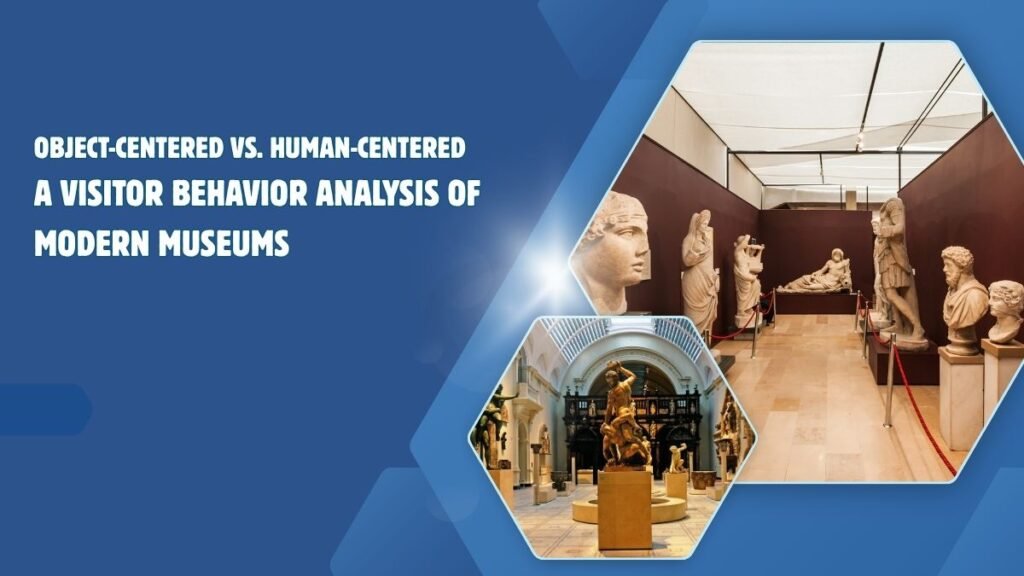
For generations, the standard definition of a museum was rooted in preservation and quiet observation. These traditional institutions were built as grand repositories for historical artifacts, fine art, and scientific specimens. The spatial arrangement was intentional: objects were placed safely behind glass cases or roped off from the public, accompanied by small printed text cards. Visitors were expected to walk through the galleries in a quiet, linear fashion, consuming information passively through sight alone.
However, the rapid evolution of digital culture and experiential architecture has given rise to a completely different model: the interactive museum. Instead of prioritizing the object alone, these modern venues place the visitor at the center of the experience. The environment encourages physical touch, manipulation, digital experimentation, and social collaboration.
For property developers, cultural institutions, and entertainment investors, shifting from a traditional layout to an interactive one is not just an aesthetic choice. It fundamentally alters how people move, learn, socialize, and spend time within a facility. By analyzing data on visitor behavior, we can decode the exact mechanics of how interaction transforms a physical space into a high-performance venue.
The Metric of “Holding Power”: How Long Do People Actually Look?
In museum analytics, one of the most critical success metrics is holding power. This metric tracks the exact amount of time a visitor stands in front of a specific exhibition element before moving on.
When behaviorists track guests in traditional, object-based galleries, the data reveals a phenomenon known as the “browse-and-pass” pattern.
- The Traditional Attention Span: Studies show that the average visitor spends fewer than 8 seconds looking at a traditional display case, and reads less than 15% of the accompanying wall text. Because the experience is entirely visual and passive, the brain quickly satisfies its curiosity and prompts the body to keep moving.
- The Interactive Spike: When an element requires the visitor to take an action, such as pulling a lever, spinning a digital dial, or solving an on-screen puzzle, the holding power spikes dramatically. The average engagement time for a single interactive station ranges from 2 to 5 minutes.
- Active Cognitive Processing: This time increase happens because physical interaction shifts the brain from passive observation to active problem-solving. When a visitor acts as the catalyst that makes an exhibit function, they develop a personal stake in the outcome, leading to much deeper information retention.
Spatial Choreography: Linear Routes vs. Self-Directed Exploration
The way people physically navigate a building depends heavily on the exhibition floor’s design philosophy. The contrast in traffic flow between traditional and interactive layouts changes the entire utility of the real estate.
The Linear March of Traditional Galleries
Traditional museums are typically mapped out using a structural technique called “forced routing.” The floor plan dictates a clear start, middle, and end point. Visitors move along a singular, predetermined path like a conveyor belt.
While this layout is highly efficient for managing crowd control and telling a chronological story, it creates a rigid behavioral pattern. Visitors often display a default “right-turn bias,” naturally hugging the right-side walls and moving quickly through the space without exploring the center of the room. This predictable flow often leads to crowding at the beginning of an exhibition and complete emptiness toward the end.
The Networked Flow of Interactive Hubs
Interactive spaces replace the linear march with a decentralized or “organic matrix” layout. Displays are arranged as open islands or clusters across the room. This arrangement relies heavily on Strategic Space Planning to ensure that visitors can see multiple points of interest from any standing position.
Behavioral tracking in these environments shows that visitors move in an exploratory, non-linear pattern. They glide between stations based on personal interest, visual curiosity, or real-time availability. This self-directed exploration evenly distributes the crowd across the entire floor plan, eliminating severe bottlenecks and enabling the building to safely handle a much higher overall guest capacity.
The Social Dynamics: From Isolated Silence to Collaborative Action
Human communication and socialization undergo a radical transformation depending on whether a space is designed for passive viewing or active participation.
- The Isolation of Traditional Viewing: Traditional museums naturally enforce an unspoken code of conduct: speak in whispers, do not touch, and maintain a respectful distance from others. This environment causes visitors to process the exhibition in isolation. Even when families or couples visit together, they tend to stand side by side in silence, reading the text plaques individually. The social interaction is minimal until they leave the gallery space.
- The Collaboration of Interactive Hubs: Interactive exhibits act as social icebreakers. When a display requires multiple inputs to unlock an animation, or when a digital sandbox allows multiple people to shape a virtual landscape simultaneously, the space forces communication. Strangers talk to one another, parents actively collaborate with their children, and groups work together to achieve goals. The acoustic and social energy shifts from a quiet library atmosphere to a vibrant, cooperative laboratory.
Overcoming “Museum Fatigue”: The Physics of Mental Burnout
One of the oldest challenges in public venue design is a behavioral condition known as museum fatigue. First identified by researchers in the early 20th century, museum fatigue describes the sudden wave of physical exhaustion and mental burnout that hits visitors after roughly 30 to 45 minutes of continuous walking through a gallery.
Many people assume this fatigue is purely physical, caused by standing on hard concrete or marble floors. However, behavioral data proves it is primarily cognitive.
- The Cause of Cognitive Burnout: Traditional museums offer a highly uniform sensory experience. The lighting stays consistent, the text formatting is identical, and the method of consumption never changes (standing and looking). The brain gets tired of processing repetitive visual inputs, causing the visitor to lose interest, speed up their pacing, and head straight for the exit.
- The Multi-Sensory Reset: Interactive museums combat cognitive burnout by continually varying the sensory and physical demands placed on visitors. One station might require fine motor skills (adjusting a microscopic lens), the next might involve full-body movement, and another might focus on a rich audio narrative. By constantly switching between different cognitive and physical tasks, the brain’s attention span resets, allowing visitors to stay inside the facility much longer without feeling drained.
Engineer High-Performance Public Spaces with Snomusement
Transforming a public venue from a passive, object-centered gallery into a highly immersive, interactive destination requires deep technical authority, advanced space planning, and precise structural engineering. If an operator installs complex digital hardware or physical interactives without considering crowd flow, acoustic separation, and user psychology, the facility will face severe bottlenecks, high maintenance costs, and poor guest retention.
If you are an investor, property developer, cultural institution, or commercial estate owner looking to build a high-ROI, experience-driven destination, Snomusement is your trusted B2B partner. We operate as India’s premier entertainment infrastructure consultancy and development brand, turning advanced human psychology and bold architectural visions into highly successful, operationally sound realities.
Our elite cross-disciplinary team provides end-to-end consulting, technical execution, and master planning across all specialized attraction sectors, including:
- Interactive gallery curation and structural layout design led by an expert Museums Design Company.
- Comprehensive feasibility studies, project positioning, and strategy through Theme Park Consulting Services.
- Advanced master planning, thematic alignment, and schematic creation driven by Theme Park Design Services and full Theme Park development Services.
- Acoustic zoning, traffic flow management, and crowd load optimization are managed via Strategic Space Planning.
- High-thrill physical challenges engineered by an established Adventure Park Design Company offering complete Adventure Park Development Services.
- Sub-zero mechanical engineering and climate isolation designed by a trusted Snow Park Design Company, providing full Snow park development Services.
- Safe, ergonomic family spaces utilizing specialized Kids Play Area Design and Creative Indoor Playground Design.
- Vibrant, high-margin evening lightscapes created by a leading Glow Garden Design Company.
- Advanced water-recirculation systems and aquatic layouts from a specialized Water Park Design Company.
At Snomusement, we eliminate development risk by focusing on strict technical authority, absolute structural safety, and verified market economics. We ensure your facility is engineered to maximize visitor holding power, minimize operational overhead, and deliver an outstanding, long-term return on investment.
Contact Snomusement today to schedule your corporate project feasibility, interactive design, and space planning consultation.